Unveiling the Power of React Server Components
Introduction:
In the ever-evolving landscape of web development, React has consistently pushed boundaries. The latest evolution comes in the form of React Server Components—an innovation set to redefine how we approach building dynamic and efficient web applications.
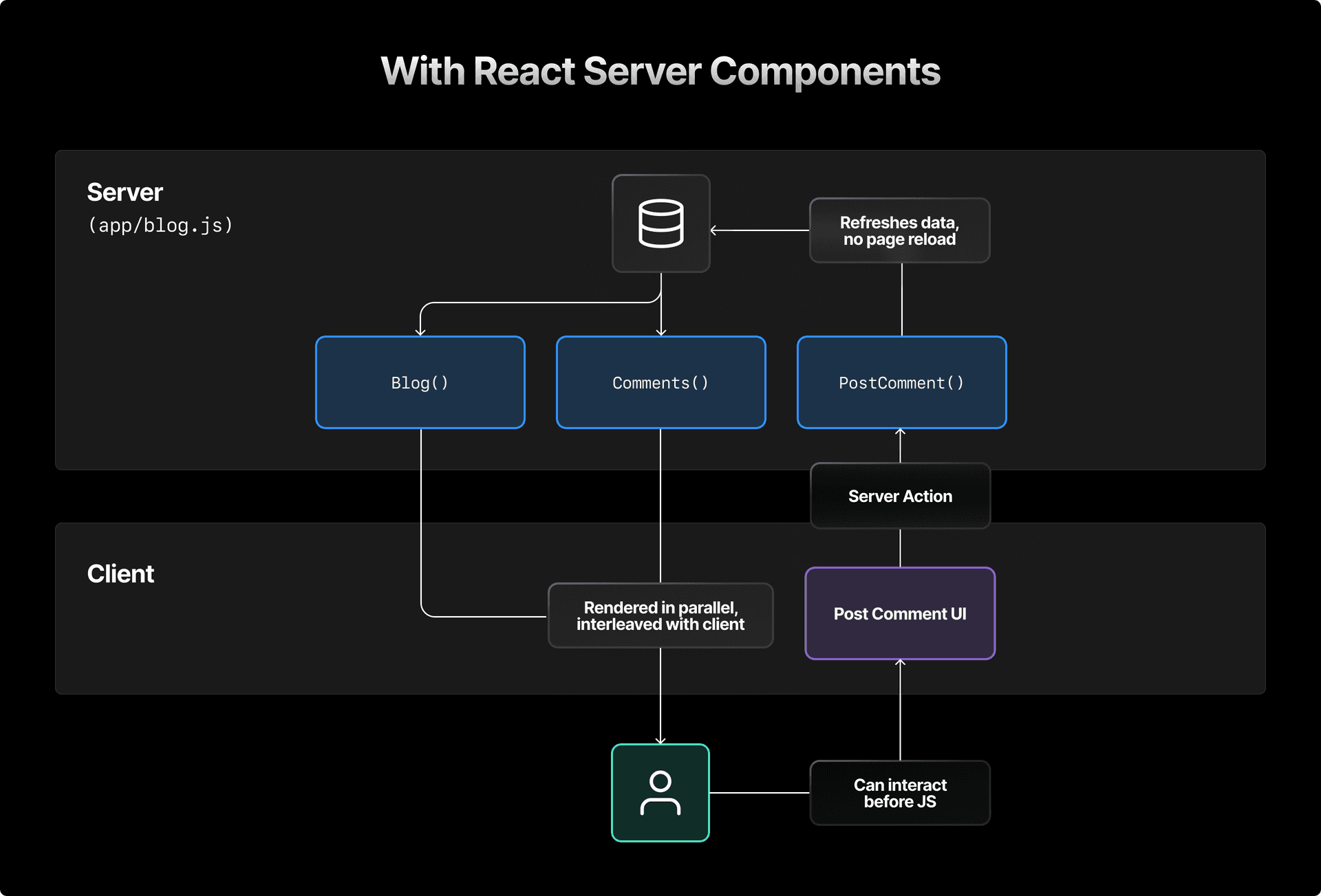
Understanding React Server Components: React Server Components introduce a groundbreaking approach by shifting the rendering logic from the client to the server. Unlike traditional React components, Server Components allow developers to render UI components on the server, sending only the necessary HTML, CSS, and JavaScript to the client.
Architectural Overview: At the heart of React Server Components is a dual-rendering architecture. The server renders components during the initial request, providing a fast and efficient load time, while the client takes over subsequent renders. This duality enables a seamless blend of server-side rendering (SSR) and client-side rendering (CSR) for an optimal user experience.
Benefits of React Server Components:
- Improved Performance: By offloading rendering to the server, React Server Components significantly reduce the amount of JavaScript sent to the client, leading to faster initial page loads.
- Enhanced Scalability: Server Components allow for efficient server rendering, making it easier to scale applications without compromising performance.
- Code Splitting Made Easy: Developers can focus on writing components without worrying about optimizing for code splitting. React Server Components naturally support granular code splitting.
- Simplified Data Fetching: Server Components streamline data fetching, simplifying the process of fetching data during the server render and passing it seamlessly to the client.
Getting Started with React Server Components:
- Installation: Begin by installing the experimental version of React that supports Server Components.
- Component Creation: Create a React Server Component using the new
react-serverpackage, defining both server and client rendering logic. - Usage: Incorporate Server Components into your existing React application, experiencing the benefits of improved performance and simplified data fetching.
Challenges and Considerations: While React Server Components offer a promising future for web development, it's essential to acknowledge potential challenges, such as the experimental nature of the technology and the need for a supportive ecosystem.
Looking Ahead: React Server Components mark a pivotal moment in the React ecosystem. As the technology matures and gains broader adoption, we can anticipate an exciting era of web development characterized by enhanced performance, scalability, and a more streamlined developer experience.
Conclusion: In the dynamic world of React, Server Components stand as a testament to the community's commitment to innovation. As we explore the possibilities they bring, we invite developers to join the journey, experiment, and contribute to the evolution of web development with React Server Components.
Acknowledgments: A special thanks to the React team and the broader developer community for their dedication to pushing the boundaries of what's possible in web development.